Posts

Showing posts with the label Reading

Reading Notes: Fables of Bidpai Part B

Image
 Bibliography:  The Tortoise and the Geese and Other Fables of Bidpai  by Maude Dutton (1908) The Lean Cat and the Fat Cat Once there was a lean cat who never had food to eat. One day, he sees one of his friends who has gotten fat off food from the king's table. His friend says he will take him to eat from the king's table. However, the king made a decree that no cats were entered inside. Every other cat ran away, but the lean-greedy cat did not care and ran onto the table. Here he was caught by the cook and killed.  The moral of the story is to always be content with what you have.  A King had a prized falcon which he always took with him to hunt. Once, while he was hunting, he was separated from his hunting party while pursuing a deer. After the long ride the King was thirsty and found a stream to drink from. While the King was trying to collect water his falcon continously knocked it out of his hand making the King angry. The King became so angry that he thre...

Reading Notes: Fables of Bidpai Part A

Image
Bibliography:  The Tortoise and the Geese and Other Fables of Bidpai by Maude Dutton (1908) Illustration by Boyd Smith A Gardener who lived by himself was lonely and wanted a companion. As he looked for someone to talk to he met a bear who was also lonely. They quickly became friends and the Gardener would feed the bear while the bear keeps flies off the Gardener while he sleeps. One day, while the Gardener was sleeping a fly was hopping around him and the bear started to get angry and threw a large stone at the fly and it killed the fly and the Gardener. This shows that it is better to have a wise enemy than a foolish friend. A Hunter places a snare for a Fox, but the Fox is clever and does not fall for it. However, a Leopard comes along and falls into the trap. The Hunter hears all the noise it made and jumps into the hole after it thinking it's the Fox, but the it is the Leopard who kills the Hunter instead. A Rich Man, who is also very stingy, buys wood from poor woodcutters f...

Reading Notes: Indian Fables and Folklore Part B

Image
Indian Fables and Folklore  by Shovona Devi (1919) Cat from BBC Khuspa was formed when Brahma had a sneezing fit and helped the gods kill the giants and was made the king of the Earth for this. He was very boastful and the sage Dadichi was offended by this and boxed Khuspa's ears. This angered Dadichi more and he was granted a boon from Mahadeva and his body was as hard as diamond. When Dadichi attacked Khuspa again there was nothing his enemy could do against his hard body. This angered Khuspa and he was granted a boon from Vishnu who was against him attacking Dadichi.  When Khuspa attacked him again he still could not defeat him even with the help of the gods as Mahadeva protected Dadichi. Khuspa finally saw his fault of being boastful and apologized to Dadichi. A teacher cannot sleep at night due to all the mice so he tasks his pupil to find him a cat, but the pupil does not know what a cat looks like so his teacher describes one to him. The description is vague and after a...

Reading Notes: Indian Fables and Folklore Part A

Image
  Indian Fables and Folklore by Shovona Devi (1919) The Moon  by Alistair MacBain A herd of hare live by a herd of elephants who have started to take over the hares' home, and stampede them often. To solve this problem, one hare goes to the lead elephant while he is in a pool of water at night. The hare tells the elephant that he is desecrating a sacred place and that the hare is from the moon. The hare informs him that if he does not leave the moon will catch him.  When the elephant keeps shrugging him off the hare keeps saying that the moon is coming for him and when the reflection of the moon reaches the elephant he gets started and leaves with all the other elephants.  This fable shows that your problems can be solved by being clever.  A troop of monkeys jump around in the jungle at night guided by the light of the moon. However, when a cloud covers the moon they search for it and think that it has fallen. They see a reflection of it in a pool of water at t...

Reading Notes: Divine Archer Part B

Image
The Divine Archer   by F.J. Gould (1911) Rama and Ravana Hanuman goes to Lanka where Ravana is holding Sita. During her capture Sita has denied Ravana's advances and stays true to Rama.  Hanuman gives Sita Rama's ring which proves that Rama is coming to save her.  Ravana's guards capture Hanuman but he starts a fire throughout the city. Rama attacks Lanka and manages to slay Ravana with the help of Indra's chariot and weapons.  To prove that Sita was loyal to Rama she walks to a fire unscathed which she does and Rama is satisfied. However, many of Rama's subjects do not believe this so she is exiled to a sage. While in exile Sita gives birth to twins.  These twins stop a horse sacrifice that Rama performs and they are re-united through this.  Sita proves her innocence by a throne appearing for her in the palace and goes down into the earth.

Reading Notes: Divine Archer Part A

Image
The Divine Archer by F.J. Gould (1911) Birth of Dasharatha's Sons This is a much more concise version of the Ramayana, but still highlights many of the key points. However, we do not get to see the dialogue between characters which enriches the story.  Rama is born to King Dasharatha, and has three other half-brothers. Rama wins Sita's hand by bending Shiva's bow and strings Vishni's bow with ease. Due to his great feats Rama is going to be declared as Dasharatha's successor, but Bharata's mother stops this so Bharata can be king.  This ruins her relationship with Bharata after Dasharatha dies because of the grief that he feels for exiling Rama for 14 years. While Rama is exiled Sita and Lakshmana join him and they defeat many rakshakas. After mutilating Shurpanakha, her brother Ravana steals Sita. This means Rama and his friends have to go find her and bring her back.

Reading Notes: Twenty Jataka Tales Part B

Image
  Twenty Jataka Tales  by Noor Inayat (1930) The Noble Horse A great buffalo who is very docile and kind is constantly annoyed by a monkey who tries to anger the buffalo. However, no matter what the monkey does the buffalo is unfazed. One day, a fairy appears and praises the buffalo for its kindness and puts a charm on it so that it will never be bothered again. This tale shows how important patience is and how it will always be repaid, though you might not know when. The richest kingdom in India has the most noble horse in the nation, but when seven rival kingdoms band together to defeat the great nation the horse is taken into battle.  The rider and horse defeat the first five kingdoms easily, but is wounded when fighting the sixth army. The rider wants the horse to stop fighting but the horse tells the rider that if he does not use him in battle the seventh kingdom will win.  The horse fights against the seventh kingdom and they win, but the horse dies and proves ...

Reading Notes: Twenty Jataka Tales Part A

Image
Twenty Jataka Tales by Noor Inayat (1930) The King and the Chief Dog The Monkey King rules over 80,000 monkeys high in the Himalayas and they have a fruit tree that produces the best mangoes. They cannot let the mangoes fall into the river or it will get to the humans and they will invade the home of the monkeys'.  However, this happens one day and a human king finds the fruit and goes on an expedition to find the fruit and the monkeys' learn about this so the Monkey King makes a bridge with his body and a reed across the mountains so that his subjects can leave. While, walking across one monkey is to heavy and breaks the Monkey King's back and the human king finds him like that all alone and the Monkey King makes him promise to be a good leader which he becomes.  A rich king left his prized chariot outside, and the palace dogs destroyed the leather on the chariot. The king decreed that all dogs outside of the palace should be killed to obtain justice for his ruined chario...

Reading Notes: Shri Krishna of Dwarka Part B

Image
                                Bibliography:  Shri Krishna of Dwarka and Other Stories  by C.A. Kincaid (1920) Surya gives Satrajit, a devout follower of Surya, the Syamantaka jewel which glows bright and brings good fortune to good people and death to evil. It also protects the city of Dwarka from enemies and nature.  Satrajit's loses the jewel and a few people get their hands on it with varying deaths and good fortune occuring.  Krishna goes on a mission to get it back from the bear king and is gone for 21 days and everyone thinks he is dead, but he comes back victorious. Krishna's eldest son Pradyumna was destined to be killed by a demon, but miraculously survived in the belly of a fish which was cut open by the demon's wife who raised the boy as her own. She trained him to kill the demon who tried to slay him and he did so.  He returns to Dwarka and gets a wife, h...

Reading Notes: Shri Krishna of Dwarka

Image
Bibliography:  Shri Krishna of Dwarka and Other Stories by C.A. Kincaid (1920) In a time where demons rule and terrorize the earth, Vishnu decides to intervene and and is reborn as Krishna.  He also reincarnates Shesha a snake who will help Krishna. The demon king Kansa hears a prophecy that Devaki's eight child will slay him, so he puts her and her husband in a dungeon. When Shesha, who is named Balarama, and Krishna are born no matter what Kansa does he cannot kill them because Krishna's divine power protects them.  As Krishna and Balarama grow the village moves to a new location to escape Kansa's attacks, but still Kansa sends demons to kill Krishna and every time Krishna prove his prowess and slays them. Krishna meets Indra because he told the other cowherds not to sacrifice to Indra which angered him and he sent hail and storms, but Krishna shields them from Indra's anger.  Indra sees this and goes down to meet Krishna and names him Govinda or King of the Cows ...

Reading Notes: The Five Tall Sons of Pandu Part B

Image
   Bibliography:  "The Indian Story Book: The Five Tall Sons of Pandu"  by Richard Wilson, 1914 After their exile, Yudhisthira gets his own kingdom. Duryodhana becomes upset and wants to declare war, even though many of his advisors and the Pandavas want peace.  This starts the war and it continues as it did in the version of the Mahabharata we have read before.  The Kauravas lose their commanders in the same way and the war ends when Bhima slays Duryodhana.  The ending of this version is very different than the one we read a couple weeks ago as there is not a "happy" ending.  Instead of the families being able to see their loved ones and the Pandavas going to heaven they are just left to rebuild the broken kingdom.  Arjuna and Karna

Reading Notes: The Five Tall Sons of Pandu Part A

Image
 Bibliography: "The Indian Story Book: The Five Tall Sons of Pandu" by Richard Wilson, 1914 This version of the Mahabharata is very unique as it does not include any celestial beings or their problems. Instead, it focuses on the relationship between a feuding royal family. Most of the story is very simlar to the Mahabharata we read earlier, but this is much more condensed and some details are changed.  For example, even though Arjuna wins Draupadi's hand Kunti makes her Yudhisthira's wife and not all the Pandavas. The story continues with many of the same details. Yudhisthira is king for a while, but then loses everything in a single gambling match and they all go to exile.  Their exile finally ends thirteen years later when the Pandavas help retreive the cattle. I somewhat prefer this version of the Mahabharata because the characters are not aided by other omnipotent beings who can swoop in at anytime and save them. The Cattle Raid

Reading Notes: PDE Mahabharta Part D

Image
    Bibliography: Indian Myth and Legend by Donald A. Mackenzie (1913) Yudhisthira and the Dog Bhisma is slain in battle by Arjuna after a decisive battle and Drona takes command of Duryodhana's forces. Arjuna's son is slain by Jayadratha and Arjuna makes a vow to defeat him by the time the day is over. He goes through many foes and at the very last second right when the sun was setting he finds him and kills him, avening his son Abhimanyu. As the war rages on, the tide of battle turns towards the Pandavas favor and Duryodhana starts to flee and hides underwater until the Pandavas draw him out and the war is ended by his death.  For Yudhisthira to be crowned king a horse sacrifice must be made and Arjuna is tasked with bringing it back to Hastinpura. The army encounters many enemies, and at one point Arjuna is slain by a rival king.  He is brought back to life by a magic gem and proceeds to get the horse back to Hastinpura. Vyasa brings back all the people who died ...

Reading Notes: PDE Mahabharata Part C

Image
                                 Bibliography:  Indian Myth and Legend  by Donald A. Mackenzie (1913) While the Pandavas are in exile they meet many Bhramins and sages.  Throughout this Draupadi rebukes Yudhishthira for not protecting her, but his wise words make them thing twice.  One sage tells them to send Arjuna to the Himalayas so he can get the sacred weapons they need.  Arjuna meets Shiva while praying and Shiva gives him divine weapons.  Arjuna goes to Swarga with his father Indra and spends five years there learning how to wield celestial weapons and annihilates his father's enemies. The Pandavas have many adventures during their exile and meet many gurus and sages. At the end of their exile they fight against Duryodhana in a raid and beat him which makes him angrier.  Soon the Pandavas and Kauravas start assembling their armies and Arjuna gets ...

Reading Notes: PDE Mahabharata Part B

Image
Bibliography: Indian Myth and Legend by Donald A. Mackenzie (1913) Vidura, the Pandavas uncle, helps them figure out Duryodhana's evil plot and they escape their death. However, Duryodhana thinks they actually died. The Pandavas hide in the wilderness and Bhima meets a femal rakshasa who loves him. He defeats her evil brother and they wed and have a son. Draupadi is the beautiful daughter of Drupada. The king has a swayamwara to find a husband for her. Duryodhana and his brothers are there as well as Karna.  Karna tries to win her but Draupadi is against marrying him since he is low-born so Arjuna wins her. All 5 Pandavas have to share Draupadi due to a previous declaration so Drupada and Krishna give them gifts. Yudhishthira receives his own kingdom to rule which he does well.  The Pandavas make a pact that when one of them is with Draupadi none of the others can enter. Arjuna breaks this and has to go into exile for 12 year. Arjuna meets Ulupi and they have a child, Iravat....

Reading Notes: PDE Mahabharata Part A

Image
Bibliography:   Indian Myth and Legend by Donald A. Mackenzie (1913) The authors of the Mahabharata are Vyasa and Ganesha. Vyasa dictates everything to Ganesha who constantly writes.  Vyasa has an interesting birth as his mother, Satyavati, is coerced by Parashara to make Vyasa on the condition of her not losing her virginity and her fish-like smell is replaced with a sweet-smelling fragrance. Bhishma is the son of King Shantanu and the goddess Ganga. Who helps the 8 Vasus and in return they they give a portion of their power to her son who becomes really powerful. King Shantanu has a kid with Satyavati, a son named Vyasa. Shantanu wanted to marry Satyavati but to do that he had to renounce Bhisma's claim to the throne which he did not want to do.  Bhisma, originally known as Devavrata, went to Satyavati and renounced his claim to the throne earning the name Bhisma. Shantanu and Satyavati wed and have two sons but the first one dies early and the second is too young...

Reading Notes B: Ramayana by Sister Nivedita

Image
Rama and Ravana Bibliography:  Myths of the Hindus and Buddhists: Ramayana by Sister Nivedita. 1914. For this reading note I wanted to focus on the chapter that described Rama and Ravana's battle, the slaying of Ravana, and how Mandodari mourned for him. I liked this version of the battle more as there was more detail that set the fight up better. Here Ravana was described like a hydra, this painted a gruesome picture in my mind of the fight. I also think this version portrayed how powerful Ravana was better. No matter what Rama did, no matter what weapons he used nothing could defeat Ravana until the Bhrama weapon which ultimately led to the defeat of Ravana. After the defeat of Ravana, his wife Mandodari laments over his actions and how this all could have been avoided if only Sita was given back. This scene is quite powerful as it becomes obvious that Ravana was actually loved by his kin.

Reading Notes A: Ramayana by Sister Nivedita

Image
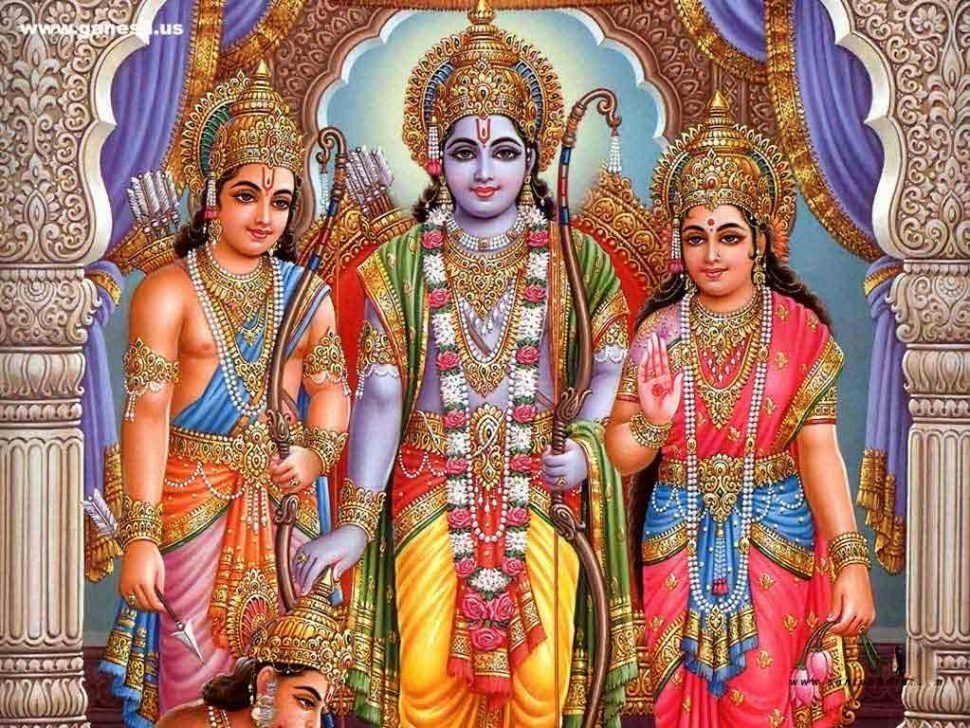
Rama, Sita, and Lakshmi Bibliography: Myths of the Hindus and Buddhists: Ramayana by Sister Nivedita. 1914. Sister Nivedita's version of the Ramayana is much different than the public domain version of the Ramayana that we read last week. This version includes more detail and dialogue, but is also condensed as it only includes the necessary information and details. However, one thing that I liked about the PDE Ramayana were the small summaries at the beginning which would help give you an idea of what was going on. In this version there are no breaks between the stories and it all blends seamlessly. I found this version harder to read as the vernacular was a bit harder to understand than the PDE version but since I knew the gist of each story it was not too hard to understand. Overall, I really liked this version of the Ramayana everything flowed together really well. 

Reading Notes: Ramayana Part D

Image
Rama on Indra's Chariot Bibiography:  Ramayana , Various Authors, Public Domain Edition As Rama attacks Ravana tries to deceive Sita by making illusions that show the death of Rama and Lakshama. A fierce battle occurs between the two armies with countless casualties on both sides.  Hanuman uses his leaping power to get to the Himalayas and takes the mountain top back to Lanka to heal all of the monkeys, bringing them back to life. Lakshmana defeats Indrajit, Ravana's son, This makes Ravana furious and he almost kills Sita in anger, but the rakshakas prevent this so he would not dishonor himself. Ravana almost slays Lakshmana but Hanuman uses the herbs to heal him.  As the gods watch the battle between the army Indra gives Rama his chariot and his personal chariot driver Matali. Rama receives advice from the sage Agastya, and performs rituals and curries the favor of the gods. He receives a weapon from Brahma and uses it to slay Ravana. To prove her love to Rama Sita under...

Reading Notes: Ramayana Part C

Image
Sugriva and Rama Bibiography:  Ramayana , Various Authors, Public Domain Edition Rama and Lakshama meet Hanuman, who quickly sees how righteous Rama is and we learn that he will be one of Rama's most devoted followers. Rama learns of Sugriva who was also exiled from his kingdom by his brother, Vali.  Rama and Sugriva are very similar characters as they both got exiled from their respective kingdoms, due to betrayal from their family. Rama kills Vali, but does it in a dishonorable way by setting up an ambush. This is the most unrighteous act we see Rama do so far. Maybe setting up some character development? After the rainy season ends, Sugriva helps Rama find Sita by sending out monkey armies and locates her in Lanka. Hanuman travels to Lanka to find Sita, and searches the whole city until he finds her in a grove of Ashoka trees. At first, Sita thinks Hanuman is deceiving her but he shows her the ring Rama gave him.  Hanuman is captured by a rakshaka, and as punishment Ra...